
Pickleball Rules for Beginners: The Five You Actually Need
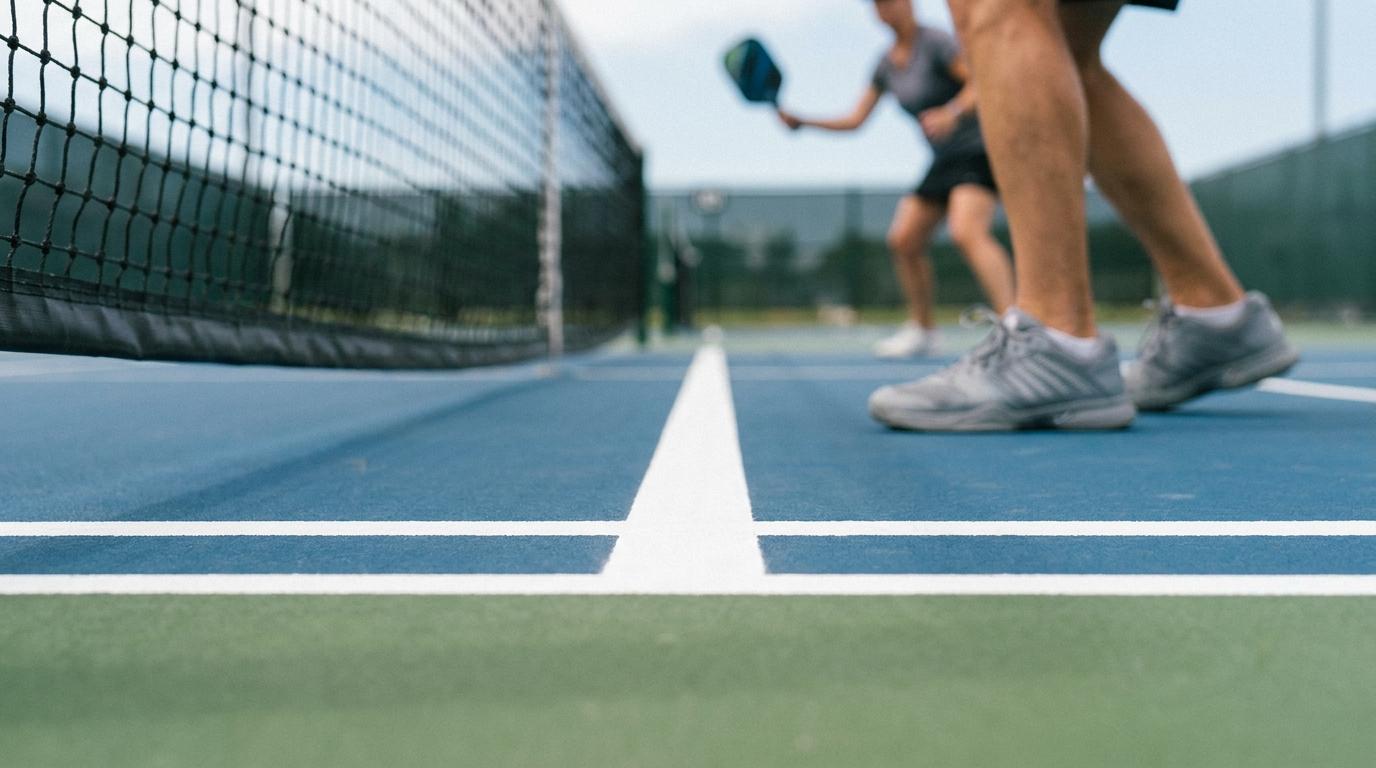
Five rules cover almost every mistake a beginner makes: serve underhand and diagonally from behind the baseline, let the serve and the return both bounce before anyone volleys, never volley while standing in the kitchen, only score on your own serve, and play the usual game format, which is to 11 points and won by a margin of two. Everything else is refinement.
What are the 5 rules of pickleball?
- Serve underhand, diagonally, from behind the baseline. The paddle comes up from below, not down from above.
- The double bounce. The serve must bounce, and the return must bounce, before anyone hits the ball out of the air.
- Stay out of the kitchen when you volley. The non-volley zone is the marked area on each side of the net. You can stand in it, you just cannot volley from it.
- Only the serving side scores. If the receiving side wins the rally, they win the serve, not a point.
- Games normally go to 11, and you win by two. That is the usual format for social play and for most tournaments, although tournament games are sometimes played to 15 or 21, and some events use rally scoring instead.
That is enough to walk onto a court and not do anything embarrassing. The rest of this post explains each one, and points you at the official rulebook where the exact detail matters. That rulebook is the 2026 USA Pickleball Official Rulebook, Global Pickleball Federation Edition. Pickleball Australia does not write its own, it adopts that one and links it from its Rules and Scoring page, which is where Australian players go to find it.
The serve: underhand, diagonal, behind the baseline
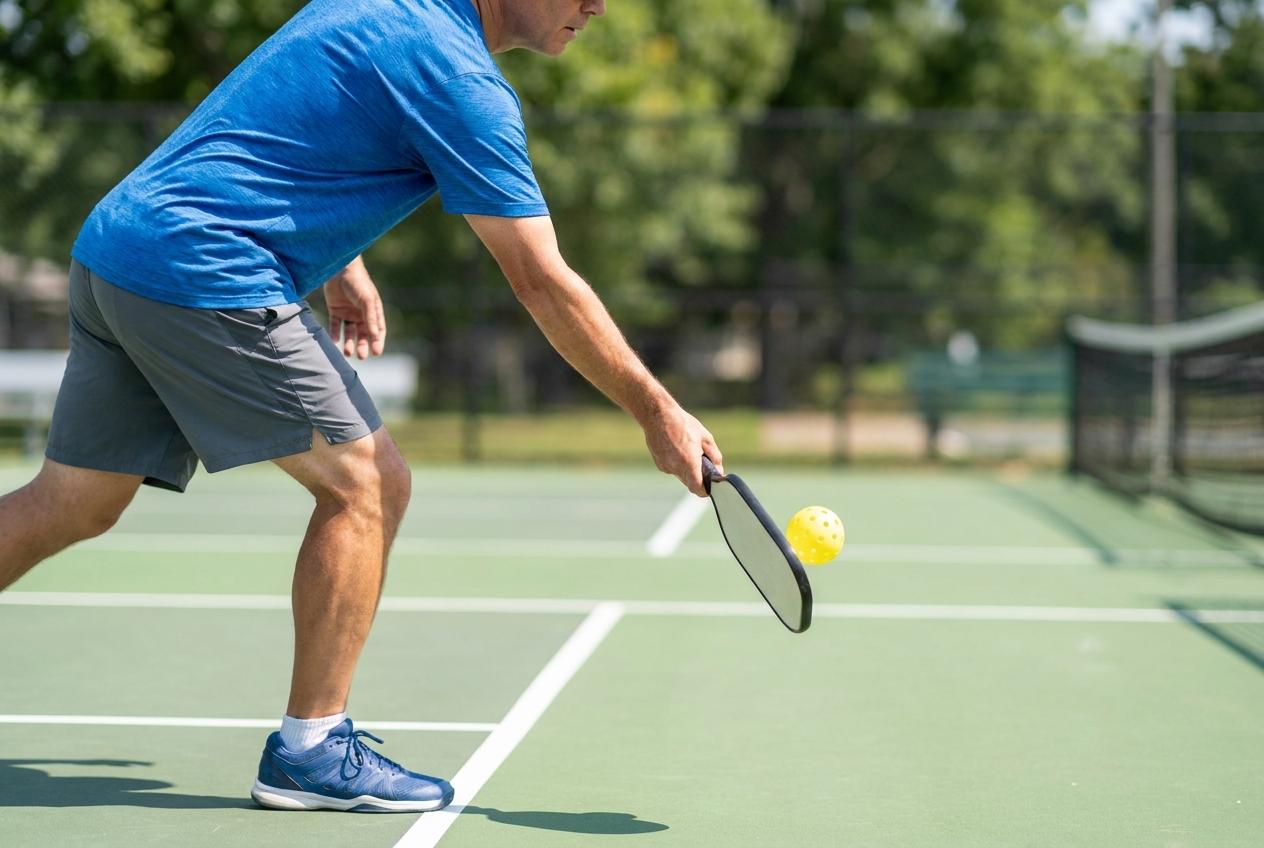
A pickleball serve is not a tennis serve. There is no throwing the ball up and swinging down at it. The paddle travels upward into the ball, and the serve goes cross court, into the service court diagonally opposite you.
Two serve styles are in common use: the traditional volley serve, where you strike the ball out of your hand, and the drop serve, where you let the ball bounce off the court first and then hit it. Both are legal. The drop serve is the easier one to learn, and nobody at a social session will think less of you for using it.
Where your feet must be
Behind the baseline, and inside the imaginary lines extending back from the centreline and the sideline of the service court you are serving from. In plain terms: stand behind the back line, on the correct half of the court, and do not step on or over the baseline until you have hit the ball.
What makes a serve a fault
The common ones: the ball lands outside the diagonal service court, the ball lands in the non-volley zone or on the kitchen line, your foot touches the baseline as you serve, or the serving motion is not upward. A serve that clips the net and still lands in the correct service court is played on.
The exact wording on the serving motion and the height of contact has been revised more than once, so check the current rulebook, which Pickleball Australia links from its Rules and Scoring page, if you want the letter of it. We are giving you the shape of the rule here, not a legal quote.
The double-bounce rule (and why it exists)
Also called the two-bounce rule. As that rulebook sets it out, the serve must bounce once before the receiver returns it, that return must then bounce once before the serving side hits it, and only after those two bounces can anyone volley, meaning hit the ball out of the air.
So no, you cannot return a serve without letting it bounce first. That is a fault, and it is the single most common beginner error there is.
The rule exists to stop the serving team from rushing the net and ending the point on the third ball. It gives the receiving team a fair start, and it is a big part of why pickleball rallies last long enough to be fun on day one.
The kitchen: what it is and when you can step in it
The kitchen is the zone marked on the court on each side of the net, running the full width of the court. Its proper name is the non-volley zone.
You are allowed to stand in it whenever you like. What you are not allowed to do is volley from it. If the ball bounces in the kitchen, you can step in, let it bounce, hit it, and step back out. That is legal and it happens constantly.
So the answer to “can I step in the kitchen before the ball bounces” is yes, you can be standing there. You just cannot hit the ball out of the air while you are.
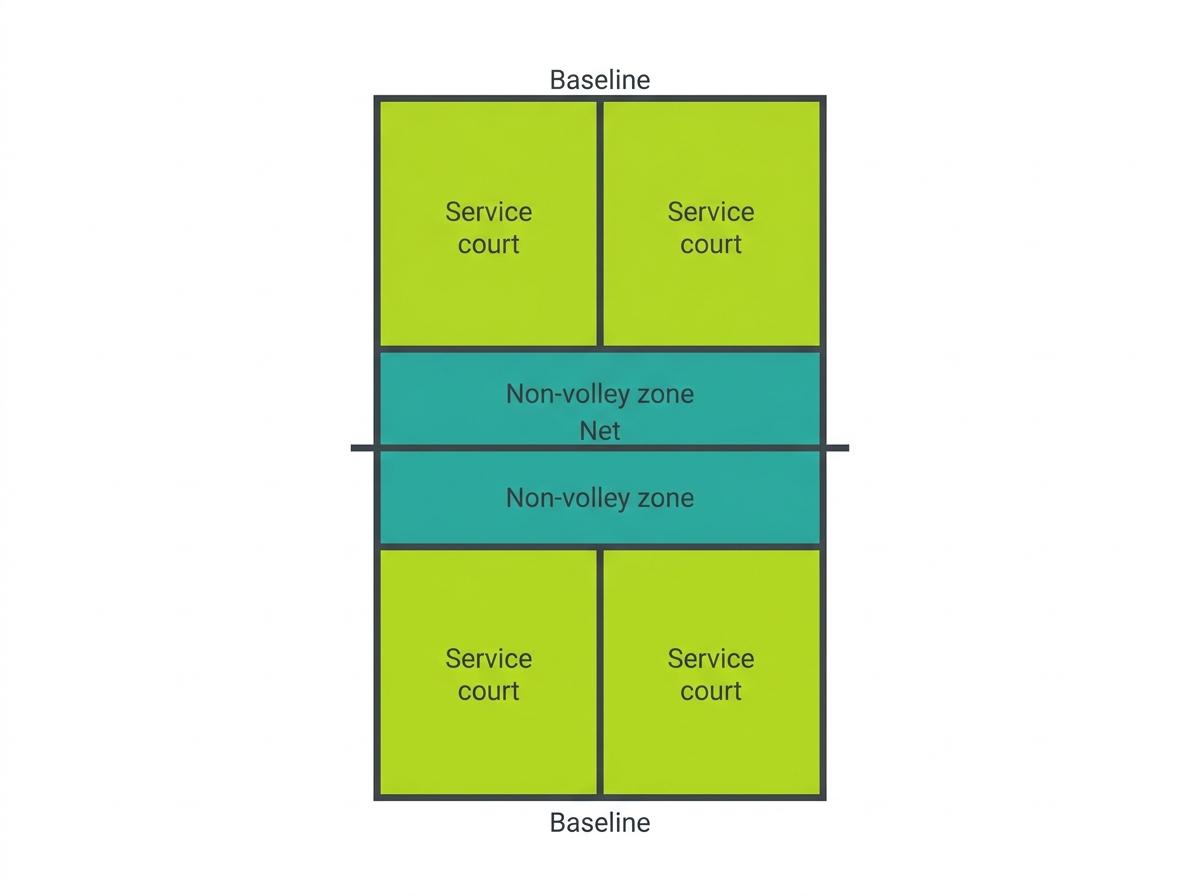
The non-volley zone, marked on court
The zone is painted on every marked pickleball court, so you do not need to measure anything yourself. The line itself counts as part of the zone: touching it while you volley is a fault. For the exact court and zone dimensions, use the official rulebook rather than our summary, because we would rather send you to the source than quote a number from memory.
The momentum rule people always miss
If you volley the ball from outside the kitchen but your momentum carries you into the kitchen afterwards, it is still a fault. The point being over already does not save you. Land your volleys with your feet behind the line, and give yourself room.
Scoring: to 11, win by 2, and only on your serve
Everything in this section is the standard scoring format from the official rulebook, not a club house rule, and that rulebook, linked by Pickleball Australia, is the place to check the exact wording before it ever matters in a match.
Under that format, games are normally played to 11 points and won by a margin of two, so 11 to 10 keeps going. Tournament games are sometimes played to 15 or to 21 instead, still won by two, so ask before a match which one you are playing.
You only score when your side is serving. Win a rally on the other side’s serve and you gain the serve, not a point. That is traditional side-out scoring, and it is what you will meet at most social play. Rally scoring, where a point is awarded on every rally regardless of who served, also exists and turns up in some formats, so it is worth asking which one is being used before a game starts.
In doubles, the score is called as three numbers before each serve: your team’s score, the other team’s score, and whether you are the first or second server on your team. Both players on a side get a turn to serve before the serve goes back to the opposition, except at the very start of a game, where the first serving team only gets one server. Getting the call wrong is not a crime. Ask, and someone will tell you.
Five things you cannot do in pickleball
- Volley while standing in the non-volley zone, or touching its line.
- Volley the serve or the return. The double bounce comes first.
- Serve overhand. The motion goes upward.
- Score a point on the other side’s serve. You win the serve instead.
- Let the ball bounce twice, or hit it into the net, or out. Same as any racquet sport.
Add one more that is not a rule but will make you popular: do not stand there apologising after every mistake. Everyone on the court has made all five of these.
The golden rule, and the five P’s
You will hear people talk about “the golden rule of pickleball” and “the five P’s of pickleball”. Neither is a codified rule in any rulebook we can point you at. They are informal phrases players use, and different people use them to mean different things.
What people generally mean by the golden rule is a courtesy point rather than a scoring one: play so the other three people on court have a good time, call your own faults honestly, and give the benefit of the doubt on a line call that is genuinely close. That is the spirit of social pickleball, and it is worth more than any tactic.
If you want rules you can rely on in a match, use the official ones. USA Pickleball publishes the rulebook, in its Global Pickleball Federation edition, and Pickleball Australia adopts it and links it from its Rules and Scoring page, so that page is the easiest place for an Australian player to find the current version.
Is pickleball hard to learn?
No. That is most of the appeal. The court is small, the paddle is short, the ball is a perforated plastic ball that travels slowly, and the double-bounce rule keeps the first few shots of every rally civilised. Most people are holding real rallies in their first session.
What takes longer is the soft game: the dink, a gentle shot that drops into the opponent’s kitchen, and the third-shot drop, the shot the serving team uses to get up to the net safely. That is the part that keeps people coming back for years. Easy to start, hard to master is not marketing copy, it is an accurate description of the game.
For a first session you need non-marking court shoes, comfortable clothes and water. Hold off on buying a paddle until you have played, and ask us beforehand whether there is one you can borrow rather than assuming either way.
What to learn next: the one shot that matters most
The third-shot drop. After the serve and the return, the serving team is stuck near the baseline while the receiving team is up at the kitchen line. The third shot is how you fix that. Hit it softly so it drops into their non-volley zone, and you get time to move forward.
If you would rather have one skill than one shot: control over power. Beginners lose points by hitting hard into the net. Getting the ball to land where you meant it to, again and again, wins far more social games than pace ever will.
Come and get it wrong with us in Adelaide’s north
The Gawler & Barossa Pickleball Social Club plays across two venues in Adelaide’s north: Essex Park, home of the Gawler & Districts Tennis Association on Victoria Terrace, Gawler, and Voyager Tennis at Playford, at the Playford Tennis Centre on Spruance Road, Elizabeth East.
We do not run to a fixed weekly timetable. Sessions are arranged around when people are actually free, so the useful thing to do is tell us when you are available rather than wait for a day and a time to be posted somewhere. Email Jordan at jordanvonstanke@gmail.com or call 0400 651 826, say roughly when suits you, and we will let you know what is happening.
You will not be the only person on court still counting the bounces out loud.